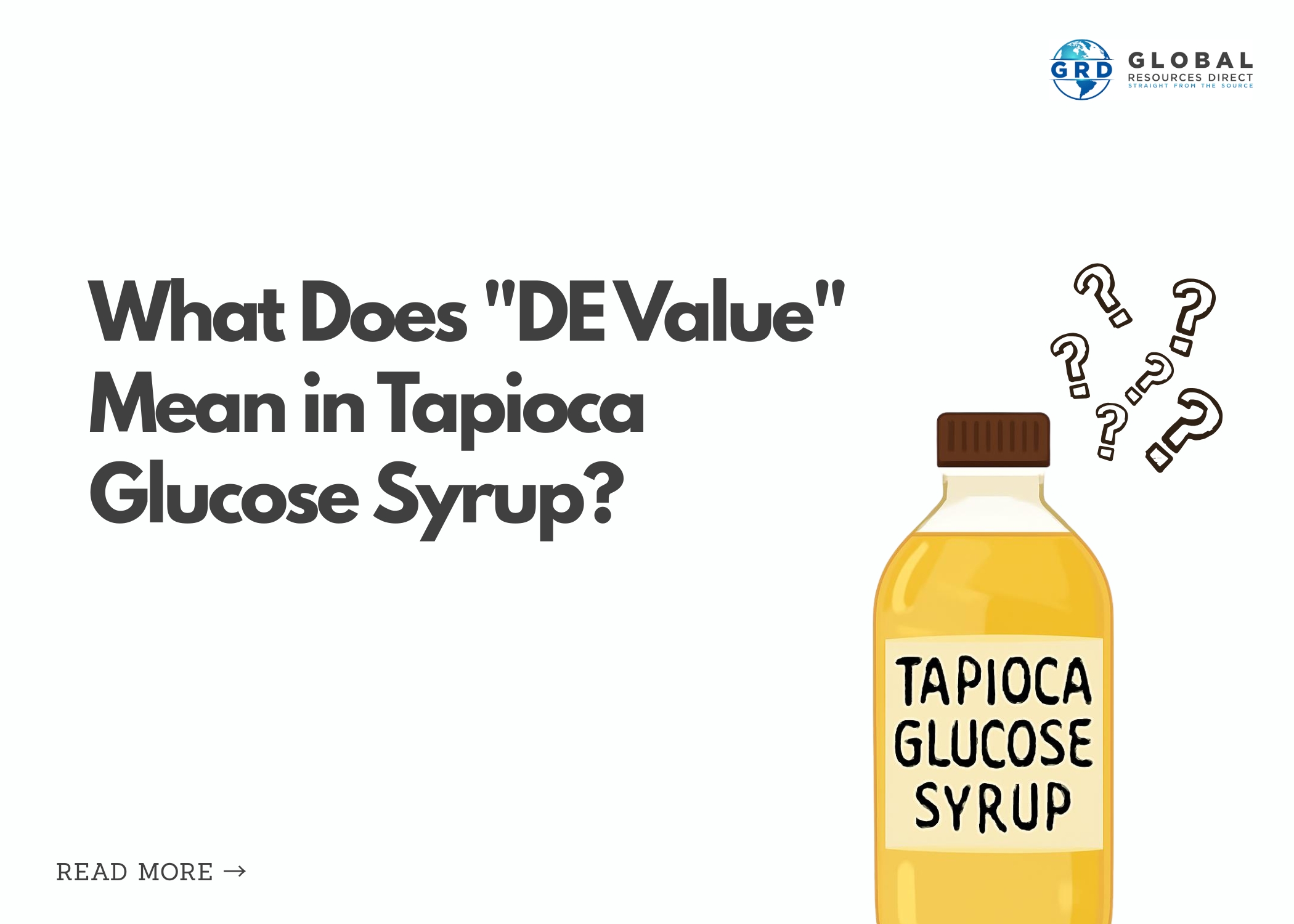


What Does "DE Value" Mean in Tapioca Glucose Syrup?

DE, or dextrose equivalent, measures how far a starch has been broken down into sugars. In tapioca glucose syrup, the DE sets sweetness, viscosity, binding, and browning. Pure dextrose scores 100, unhydrolyzed starch scores near zero, and most glucose syrups fall in between.
A 42 DE grade sits in the middle, balancing mild sweetness with strong binding, which is why it is so common. Read the DE first, and you know how the syrup will behave in a formula.
What DE Value Means
DE is a single number that tells you how much a starch has been converted into sugars. Three points make it clear.
Dextrose Equivalent, Defined
The dextrose equivalent of a tapioca glucose syrup is the share of reducing sugars measured against pure dextrose. A higher DE means the starch has been broken into more and shorter sugar chains. A lower DE means longer chains remain.
How DE Is Set
Enzymes break cassava starch into glucose, maltose, and longer sugars. The further that conversion runs, the higher the DE climbs. A 42 DE syrup is stopped at a controlled mid-point, leaving a mix of simple sugars and longer chains.
The DE Scale
The scale runs from near zero for intact starch to 100 for pure dextrose. Maltodextrins sit below 20 DE, while glucose syrups span roughly 20 to 100. A 42 DE grade lands squarely in the common syrup range.
The table shows how DE level shapes behavior.
| DE Level | Behavior | Typical Use |
|---|---|---|
| Low, under 20 | Very viscous, low sweetness, strong film | Bulking and body |
| Mid, around 42 | Balanced sweetness and binding | Bars, confections, bakery |
| High, over 60 | Sweeter, thinner, more browning | Sweetening and browning |
What DE Controls in Tapioca Glucose Syrup
DE is the lever behind most of the syrup's functional traits. Two groups of properties move with it.
Sweetness and Viscosity
DE and sweetness rise together, while viscosity falls. Low-DE syrups are more viscous and less sweet, while high-DE syrups are sweeter and thinner. At 42 DE, the syrup gives moderate sweetness with enough body to work in many formulas.
Binding, Humectancy, and Browning
Lower-DE syrups bind and form films better, which helps hold bars and clusters together. Higher-DE syrups are more hygroscopic, so they hold moisture and brown more through the Maillard reaction. A 42 DE grade keeps solid binding while adding mild sweetness.
Why 42 DE Is So Common
The 42 DE grade shows up everywhere because it balances the competing traits. Two reasons explain its reach.
A Balanced Workhorse Grade
At 42 DE, the syrup carries enough sweetness to matter and enough viscosity to bind, so one grade covers bars, confections, baked goods, and sauces. That same 42 DE convention appears on corn syrup, which shares the mid-range profile.
The grade also plays several roles at once, sweetening, binding, and holding moisture, which lets one ingredient stand in for multiple additives.
Matching DE to the Job
Pick a lower DE when binding and body lead, and a higher DE when sweetness and faster solubility matter most. For a milder, grain-based option, brown rice syrup is another route, though 42 DE handles most uses in one syrup. Suppliers can often provide nearby DE grades, so confirm the exact target before a run.
How to Read and Spec DE
DE is the first line to check on a syrup spec, since it predicts behavior. Two habits keep it simple.
Read DE on the Spec Sheet
DE usually appears alongside solids or Brix on the specification. Confirm the DE target and range so sweetness and viscosity land where your formula expects.
Set DE and Claims
A clear spec keeps the syrup consistent across lots.
- Confirm the DE range for sweetness and body
- Check solids or Brix for concentration
- State non-GMO or gluten-free status and drum or tote format
Wrap-up
DE value tells you how far a starch has been turned into sugars, and in tapioca glucose syrup it sets sweetness, viscosity, binding, and browning. A 42 DE grade balances all four, which is why it fits so many formulas in one syrup.
Need bulk tapioca glucose syrup or other bulk sweeteners and syrups for your line? Contact Global Resources Direct for same-day quotes, competitive pricing, and flexible minimums.
Frequently Asked Questions
What does DE stand for in glucose syrup?
DE stands for dextrose equivalent, a measure of how far a starch has been broken down into sugars. It runs from near zero for intact starch to 100 for pure dextrose.
What does a 42 DE tapioca syrup mean?
A 42 DE tapioca syrup has been converted to a mid-level point, giving balanced sweetness and viscosity. That balance makes it a versatile grade for bars, confections, and baked goods.
Does a higher DE mean sweeter syrup?
Yes, sweetness rises with DE because more of the starch is broken into simple sugars. Higher-DE syrups are also thinner, while lower-DE syrups are thicker and less sweet.
How does DE affect binding?
Lower-DE syrups are more viscous and bind and form films better, which helps hold bars and clusters together. Higher-DE syrups bind less but sweeten and brown more.
Why is 42 DE so common in food manufacturing?
A 42 DE grade balances sweetness, viscosity, and binding, so a single syrup covers many applications. That versatility makes it a workhorse across bars, confectionery, and bakery.
Where do I find the DE on a syrup spec?
The DE value is listed on the supplier's specification sheet, usually near the solids or Brix figures. Confirming the DE range tells you how the syrup will sweeten and thicken.
Latest Post