Is Milk Powder the Same as Dry Milk? A Buyer's Guide to GRD's Milk Powder SKUs

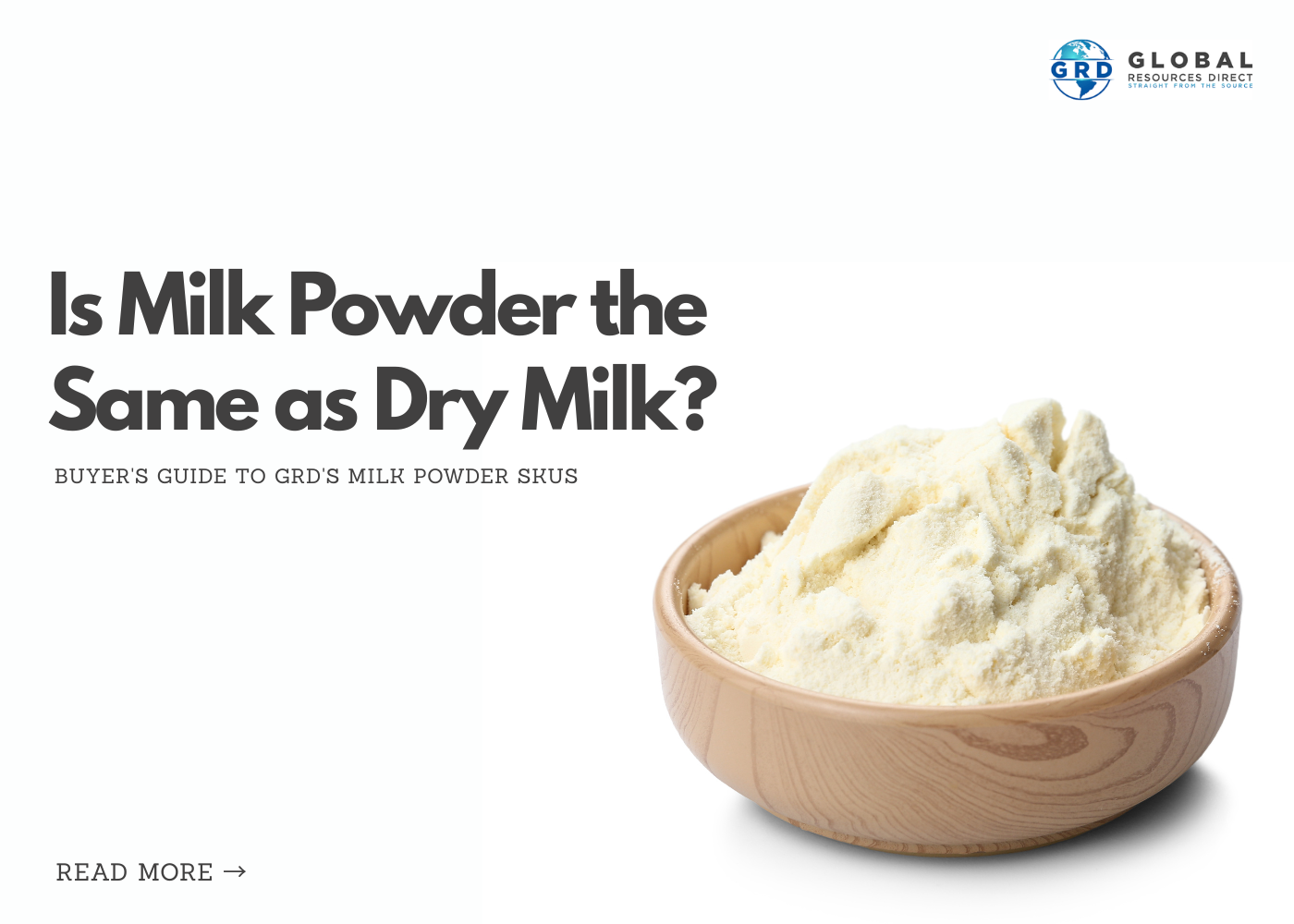
Yes, milk powder and dry milk are the same basic product: milk with the water removed. US regulations use "dry milk" in their official names, such as nonfat dry milk and dry whole milk, while "milk powder" is the common trade term.
The real differences between bulk milk powders are fat content, vitamin fortification, and whether the powder is instantized. Below, you will see how each type compares, which suits your product, and what to check before you order.
Milk Powder vs Dry Milk Explained
The two names describe the same process. What changes from one product to the next is the milk it starts from and how it is processed.
Two Names for the Same Basic Product
Producers pasteurize milk, evaporate most of the water, then spray-dry the concentrate into a fine powder. Whether a label says "milk powder" or "dry milk," the result is milk solids that can be reconstituted with water or added dry to a formula.
How US Rules Name Dry Milk
Federal standards set clear limits for the official names. Nonfat dry milk comes from pasteurized skim milk, with no more than 5% moisture and 1.5% milkfat. Dry whole milk holds at least 26% but less than 40% milkfat.
Whole Milk Powder vs Nonfat Dry Milk
Fat content is the biggest difference between milk powder types. Fat level changes flavor, texture, shelf life, and cost.
Nonfat Dry Milk
Instant non-fat milk powder is made from skim milk with nearly all the fat removed. Nonfat dry milk adds dairy solids, protein, and browning to baked goods, mixes, and sauces at a lower cost than whole milk powder. Its low fat also gives it a longer shelf life.
Whole Milk Powder
Whole milk powder keeps the milkfat, which gives a richer flavor and creamier mouthfeel. Chocolate, confectionery, and creamy beverages often use it. Because fat can oxidize, its shelf life is typically shorter than nonfat dry milk.
Fortified Nonfat Dry Milk
Instant nonfat dry milk fortified with vitamins A and D is made from pasteurized skim milk with vitamins added. Brands choose it when the finished product needs those vitamins on the label.
| Attribute | Nonfat Dry Milk | Whole Milk Powder | Fortified Nonfat Dry Milk |
|---|---|---|---|
| Starting milk | Skim milk | Whole milk | Skim milk |
| Milkfat | No more than 1.5% | 26% to under 40% | No more than 1.5% |
| Flavor and texture | Clean dairy, light | Rich and creamy | Clean dairy, light |
| Shelf life | Longer | Typically shorter | Longer |
| Typical uses | Bakery, mixes, and sauces | Chocolate and confectionery | Products needing added vitamins |
Instant vs Regular Milk Powder
Instant milk powder is processed to dissolve faster in water. The choice depends on how your product is mixed.
What Instantizing Does
Instantizing, or agglomeration, clusters fine powder particles into larger, porous granules. Those granules wet and dissolve quickly instead of clumping on the surface.
When to Choose Instant
Choose instant powder for drink mixes, reconstituted milk, and any product mixed with low shear. Regular powder works well in dough, batter, and high-shear blending, where dispersion is less of a concern.
Which Milk Powder Fits Your Product
Match the powder to the job it does in your formula. Most manufacturers use more than one type across their range.
Bakery and Mixes
Nonfat dry milk is the usual choice for breads, cakes, and dry baking mixes, where it adds browning and structure. For more on core bakery inputs, see essential baking ingredients.
Chocolate and Confectionery
Whole milk powder suits milk chocolate, caramels, and coatings, where its fat and flavor matter most. Confirm the milkfat level on the spec sheet, since it affects both texture and cost.
Beverages and Reconstituted Milk
Instant nonfat or instant whole milk powder suits drink mixes and reconstituted milk, since both dissolve quickly.
What to Check Before Ordering Bulk Milk Powder
A low quote means little if the spec sheet cannot back it up. Use the bulk ingredients buying guide for general steps, and confirm these milk powder points in writing.
-
Milkfat, protein, and moisture levels
-
Instant or regular, and solubility
-
Heat treatment class for nonfat dry milk, such as low, medium, or high heat
-
Vitamin fortification, if your label needs it
-
Microbial results per lot
-
Allergen statement, since milk is a major allergen
-
Packaging, such as cases or totes, and storage conditions
Choosing the Right Milk Powder SKU
Milk powder and dry milk are the same basic product, so choose by fat content, fortification, and whether you need an instant grade. Confirm the spec and run a sample in your product before you scale.
Need bulk nonfat dry milk or whole milk powder for bakery, confectionery, or beverage production? Request a quote to discuss your next bulk ingredient order.
Frequently Asked Questions
Is milk powder the same thing as dry milk?
Yes, both terms describe milk with the water removed. US regulations use "dry milk" in official names, such as nonfat dry milk and dry whole milk.
What's the difference between whole milk powder and nonfat dry milk for food manufacturing?
Whole milk powder keeps the milkfat, giving richer flavor for chocolate and confectionery. Nonfat dry milk has almost no fat, costs less, and lasts longer, which suits bakery, mixes, and sauces.
What is instant non-fat dry milk?
Instant non-fat dry milk is agglomerated so it dissolves quickly in water without clumping. Food manufacturers buy instant non-fat dry milk in bulk for drink mixes and reconstituted milk.
What does fortified nonfat dry milk mean?
Fortified nonfat dry milk has vitamins A and D added. Brands choose it when the finished product needs those vitamins on the label.
Is skim milk powder the same as nonfat dry milk?
The two are very similar and often used interchangeably. Specs can differ by standard and supplier, so compare protein, fat, and moisture on each spec sheet.
How should bulk milk powder be stored?
Keep it sealed in a cool, dry place away from light, heat, and strong odors. Rotate stock using a first-in, first-out method, especially for whole milk powder.