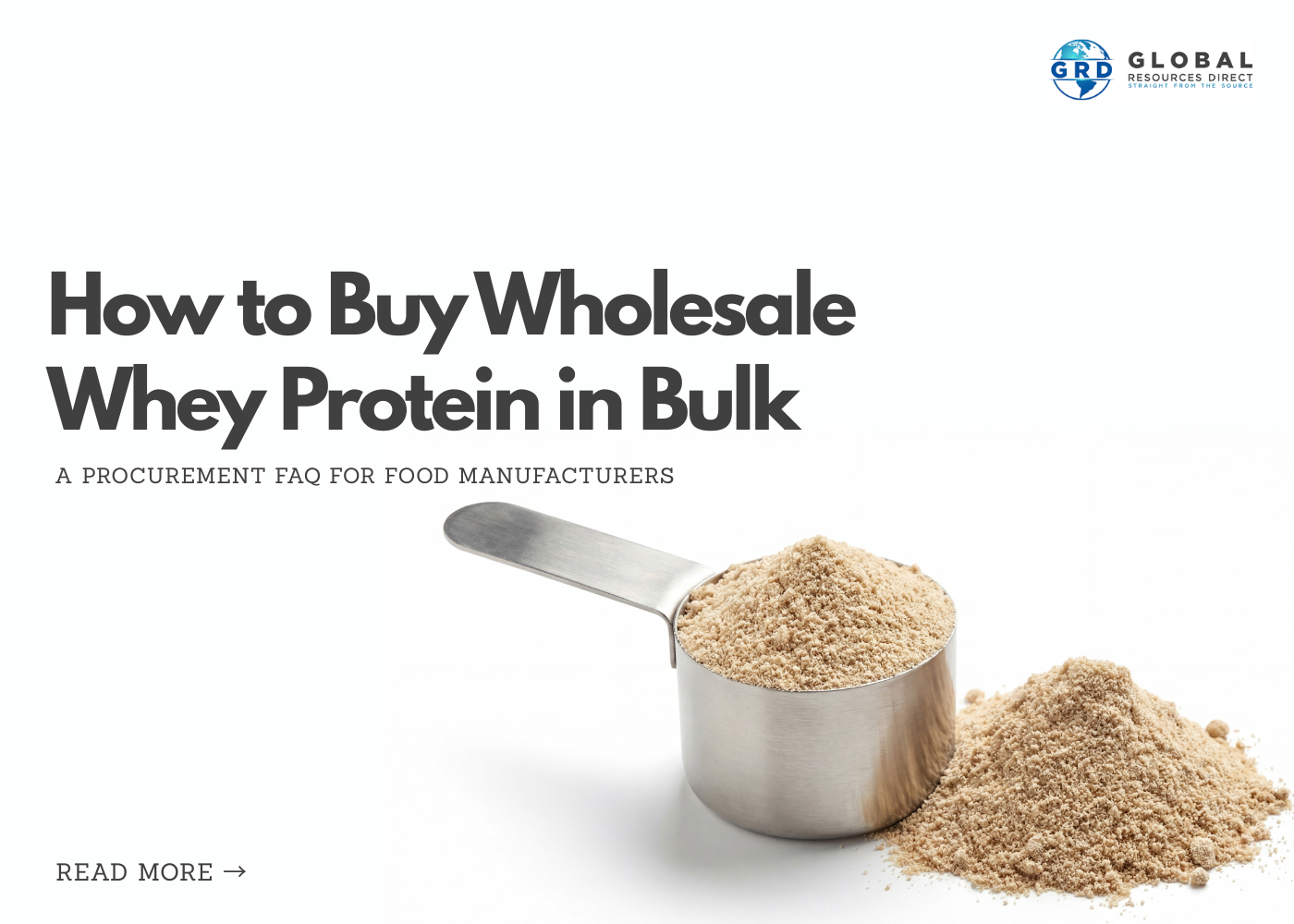
How to Buy Wholesale Whey Protein in Bulk: A Procurement FAQ for Food Manufacturers

To buy wholesale whey protein in bulk, start by choosing the type you need, such as whey protein concentrate or isolate. Then request a spec sheet and lot certificate, run a trial in your product, and order from a supplier that can ship consistent lots on your schedule.
For most manufacturers, the best place to buy is a US ingredient distributor that holds stock and sends documents with every lot. Below, you will see the main whey protein types, where to buy them, what to check, and a three-step buying process.
Whey Protein Types Food Manufacturers Buy
Whey protein is sold by protein level, processing, and format. Each type fits different products, so settle on the type before you request quotes.
Whey Protein Concentrate (WPC 80)
Whey protein concentrate (WPC) 80 typically contains about 80% protein and adds creamy body and dairy flavor. Bars, ready-to-mix beverages, yogurts, and bakery items often use it. Bulk whey protein is commonly offered as WPC 80 in instant and non-instant forms.
Whey Protein Isolate (WPI 90)
Whey protein isolate (WPI) 90 typically contains about 90% protein, with less fat and lactose than concentrate. Brands choose it for high-protein claims, clear or light beverages, and lower-lactose products. Expect a higher cost per pound than WPC.
Instant and Non-Instant Grades
Instant whey is coated, usually with lecithin, so it wets and disperses quickly in shakes and drink mixes. Non-instant whey suits bars, bakery, and high-shear blending where dispersion is less of a concern. Ask whether the lecithin comes from soy or sunflower, since soy is a major allergen.
Whey Protein Crisps
Whey protein crisps are extruded pieces, often around 60% or 70% protein, used for crunch in bars, clusters, and snacks. For a look at another animal protein option, see egg white powder vs whey protein powder.
| Type | Typical Protein Level | Best For | Notes |
|---|---|---|---|
| WPC 80 | About 80% | Bars, beverages, and bakery | Creamy body and dairy flavor |
| WPI 90 | About 90% | High-protein and light beverages | Less fat and lactose |
| Instant grades | Matches base type | Shakes and drink mixes | Check lecithin source |
| Whey protein crisps | About 60% or 70% | Bars, clusters, and snacks | Adds crunch and protein |
Where to Buy Wholesale Whey Protein
Most food manufacturers buy whey protein wholesale through one of three channels. Each trades unit price against speed, documentation, and order size.
US Ingredient Distributors
A US distributor holds whey in domestic warehouses, ships cases or totes on your schedule, and sends a certificate of analysis (COA) with each lot. You can often consolidate whey with other proteins on one order. For most small and mid-size brands, this route balances cost, lead time, and paperwork.
Dairy Processors and Bulk Whey Protein Powder Exporters
Whey is a by-product of cheesemaking, so it comes from wherever cheese is made at scale. Major exporting regions include the United States, the European Union, and New Zealand. Buying direct from processors or exporters can lower unit cost, but expect larger orders, import paperwork for foreign whey, and longer lead times.
Online Marketplaces
Online marketplaces are useful for finding suppliers and buying small trial amounts. Lot documents and consistency are often limited, so qualify any marketplace supplier fully before production.
Specs and Documents to Check
A low quote means little if the spec sheet cannot back it up. Ask every supplier of wholesale whey protein powder to confirm the following in writing.
Spec Sheet Points
Compare these points across suppliers before you request samples.
-
Protein content, stated on a dry basis
-
Fat, lactose, moisture, and ash levels
-
Microbial results, including Salmonella testing
-
Instant or non-instant, with the lecithin source for instant grades
-
Solubility, flavor, and color
Allergen and Certification Documents
Whey contains milk, a major allergen, so request an allergen statement with every lot. Kosher, halal, and non-GMO documentation is available from many suppliers when your label requires it. Ask for each certificate by name and confirm it covers the lot you receive.
How to Buy Whey Protein in Bulk
A short, repeatable process keeps quality and cost predictable. Use the same three steps for every new supplier.
Step 1. Define Your Spec
Decide the type, protein level, and instant or non-instant grade your product needs. Share that spec with each supplier, so quotes compare like for like.
Step 2. Run a Sample Trial
Test samples in your actual product for dispersion, flavor, texture, and heat stability. Bars, baked goods, and heat-treated beverages can each respond differently to the same whey.
Step 3. Confirm Packaging, Storage, and Supply Terms
Bulk whey protein usually ships in cases or totes, with private label retail packs from some suppliers. Store it sealed in a cool, dry place away from light, heat, and strong odors. Ask about order sizes and lead times when you request a quote, and decide whether contract or spot purchasing fits your volume.
Choosing Where to Buy Wholesale Whey Protein
Pick the whey type by the job it does, confirm protein, microbial, and allergen documents on every lot, and trial before you scale. A US distributor with steady stock is the simplest route for most manufacturers.
Need bulk whey protein or other proteins and powders for bar, beverage, or bakery production? Request a quote to discuss your next bulk ingredient order.
Frequently Asked Questions
Where can I buy wholesale whey protein for manufacturing?
Most manufacturers buy from US ingredient distributors that hold domestic stock, or directly from dairy processors and exporters. Distributors usually offer faster delivery and a COA with every lot.
How do I buy whey protein in bulk for manufacturing?
Define the type and grade you need, request a spec sheet and lot COA, and trial a sample in your product. Then confirm packaging, lead times, and supply terms before your first order.
Should I buy from bulk whey protein powder exporters or a US distributor?
Exporters can offer lower unit cost on very large orders, but you handle import paperwork and longer lead times. A US distributor is usually simpler for steady, mid-size volumes.
What is the difference between WPC 80 and WPI 90?
WPC 80 typically contains about 80% protein and more fat and lactose. WPI 90 contains about 90% protein with less fat and lactose.
What does instant whey protein mean?
Instant whey is coated, usually with lecithin, so it disperses quickly in liquids. Check whether the lecithin comes from soy or sunflower for allergen labeling.
How should bulk whey protein powder be stored?
Keep it sealed in a cool, dry place away from light, heat, and strong odors. Rotate stock: first in, first out.