Top 6 Gluten-Free Flours for Industrial Bakery: Cassava, Almond, Coconut, Oat, Sunflower Seed & Tigernut Compared on Hydration, Cost & Functionality

No single gluten-free flour replaces wheat on its own. Cassava and oat flour give the closest wheat-like crumb, almond and tigernut add richness at a higher cost, coconut absorbs the most water, and sunflower seed flour offers a nut-free protein boost.
The right pick depends on the crumb you need, the water each flour demands, and the cost and allergen load you can carry.
What Each Gluten-Free Flour Brings
Each flour behaves differently because its starch, protein, fat, and fiber balance differs. Grouping them by type makes the differences easier to plan around.
Starch-Forward Flours
Cassava flour is mild, fine, and the closest single-flour stand-in for wheat in texture, which makes it a common base for gluten-free blends. Its neutral flavor lets other ingredients lead.
Nut and Seed Flours
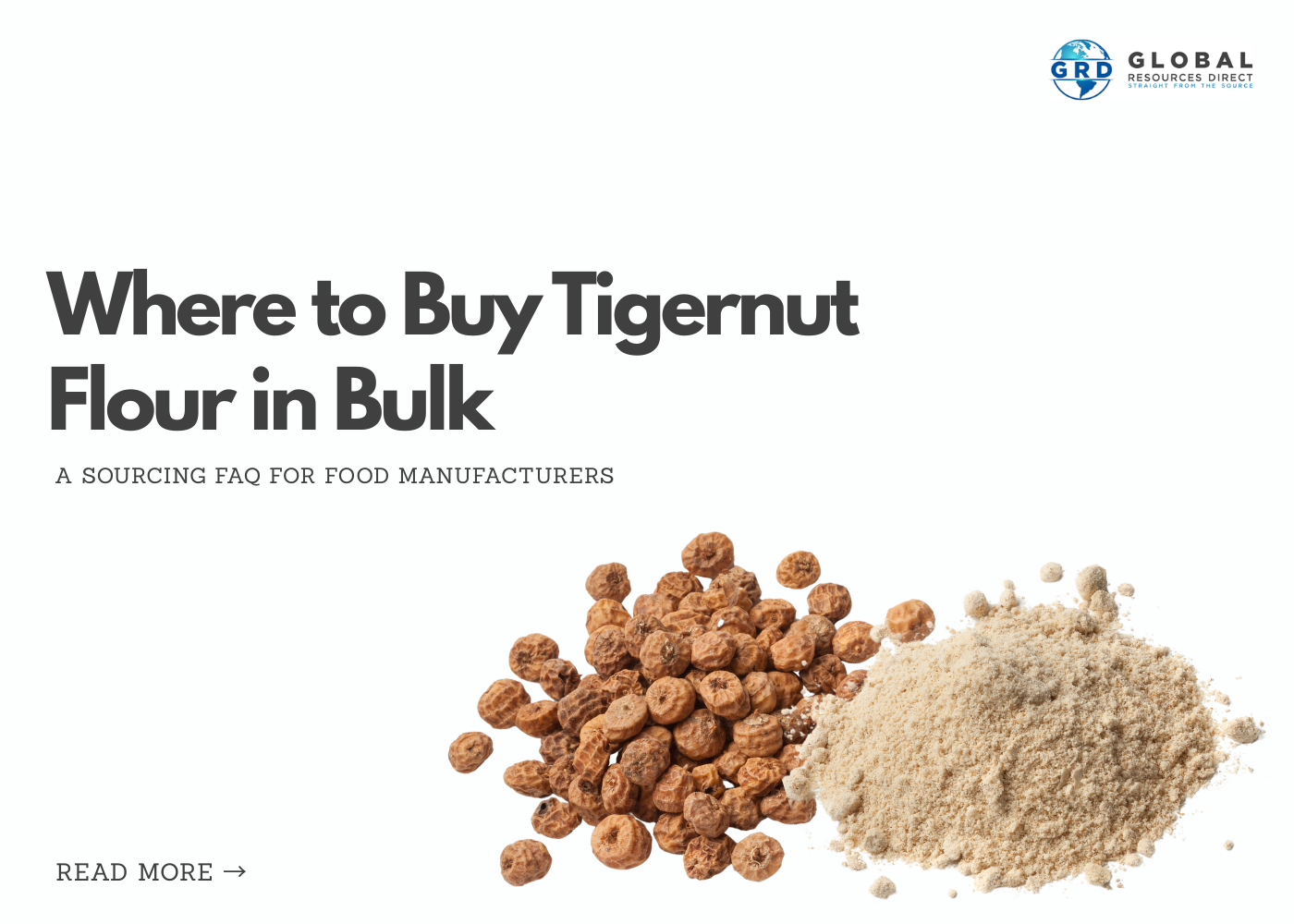
Almond flour and tigernut flour bring fat, moisture, and a rich, slightly sweet flavor, though both sit at the premium end. Sunflower seed flour delivers a comparable protein boost without nut allergens, useful for nut-free claims.
Coconut and Oat Flours
Coconut flour is extremely absorbent and needs far more liquid and egg than other flours, so it works best in small proportions. Gluten-free oat flour adds soft structure and familiar flavor, performing much like a mild whole-grain flour.
Six Flours Compared at a Glance
The table summarizes how each flour behaves at scale. Treat the cost column as a relative tier, since bulk pricing shifts with crop and origin.
|
Flour |
Hydration vs Wheat |
Flavor and Crumb |
Allergen Status |
Relative Cost |
Best Use |
|
Cassava |
Similar |
Neutral, fine crumb |
None major |
Low |
Blend base, breads |
|
Oat (GF) |
Slightly higher |
Mild, soft crumb |
Gluten cross-contact risk |
Low |
Muffins, cookies |
|
Almond |
Lower |
Rich, moist, dense |
Tree nut |
High |
Cakes, premium bakes |
|
Coconut |
Much higher |
Sweet, dense |
None major |
Medium |
A small percentage adds |
|
Sunflower seed |
Moderate |
Earthy, nut-free |
None major |
Medium |
Nut-free protein boost |
|
Tigernut |
Moderate |
Sweet, nutty |
No major (tuber) |
High |
Paleo, premium bakes |
No flour matches wheat alone. Production lines almost always blend two or three of these to balance crumb, moisture, and cost.
How to Pick the Right Flour
The decision rests on the product you are building and the constraints on label and budget. Two filters narrow it fast.
Match Hydration and Crumb to the Product
Bread lines lean on cassava and oat for a wheat-like crumb, often with a binder such as xanthan gum. Coconut flour belongs in small fractions because of its heavy water demand. Almond and tigernut suit rich cakes where density is a feature, not a flaw, a contrast explored in comparisons like oat flour versus almond flour.
Weigh Cost and Allergen Load
Almond and tigernut carry the highest cost, while oat and cassava sit lowest. Each added flour also lengthens the ingredient statement and can introduce an allergen, so a tight blend keeps both cost and label simple. Comparisons such as oat flour versus whole wheat flour show how swaps change nutrition and labeling.
Wrap-up
Gluten-free baking at scale is a blending exercise, not a one-flour swap. Lead with cassava or oat for structure, add almond, tigernut, sunflower seed, or coconut for flavor and function, and let hydration, cost, and allergens guide the ratio.
Need bulk gluten-free flours or other ingredients for commercial bakery production? Contact Global Resources Direct for same-day quotes, competitive pricing, and flexible minimums.
Frequently Asked Questions
Which gluten-free flour delivers the closest crumb structure to wheat in commercial bread lines?
Cassava flour comes closest as a single flour, thanks to its fine texture and neutral flavor. Most bread lines still pair it with a binder such as xanthan gum and a second flour, since no gluten-free flour reproduces wheat's elastic gluten network alone.
What hydration ratio adjustments do cassava, tigernut, and sunflower seed flour require versus wheat?
Cassava hydrates close to wheat, so adjustments are minor. Tigernut and sunflower seed flour absorb a little more liquid and benefit from added moisture or egg. Coconut flour is the outlier, often needing several times the liquid, so bench-test each blend.
Which gluten-free flour carries the lowest cost-per-pound in bulk pricing?
Oat and cassava flour are typically the most affordable, while almond and tigernut sit at the premium end. Exact prices move with crop year, origin, and organic status, so confirm current cost-per-pound with a live bulk quote rather than a fixed figure.
How does each flour's allergen status affect ingredient statement length for retail SKUs?
Almond flour adds a tree-nut declaration. Oat flour needs gluten-free sourcing to avoid cross-contact statements. Cassava, coconut, sunflower seed, and tigernut carry no major allergens, which keeps the statement shorter and supports nut-free positioning.
Can these gluten-free flours be used interchangeably by weight?
No. Each flour absorbs water differently and contributes different fats and proteins, so a one-for-one weight swap changes texture sharply. Reformulate the liquid, binder, and ratio whenever a flour is substituted, and validate with a test bake.
Which gluten-free flour works best for low-carb or keto bakery products?
Almond and tigernut flour suit low-carb and keto lines because of their fat content and lower net carbohydrates relative to starch-based flours. Coconut flour also fits in small amounts, while cassava and oat are more starch-forward and less suited to strict keto targets.