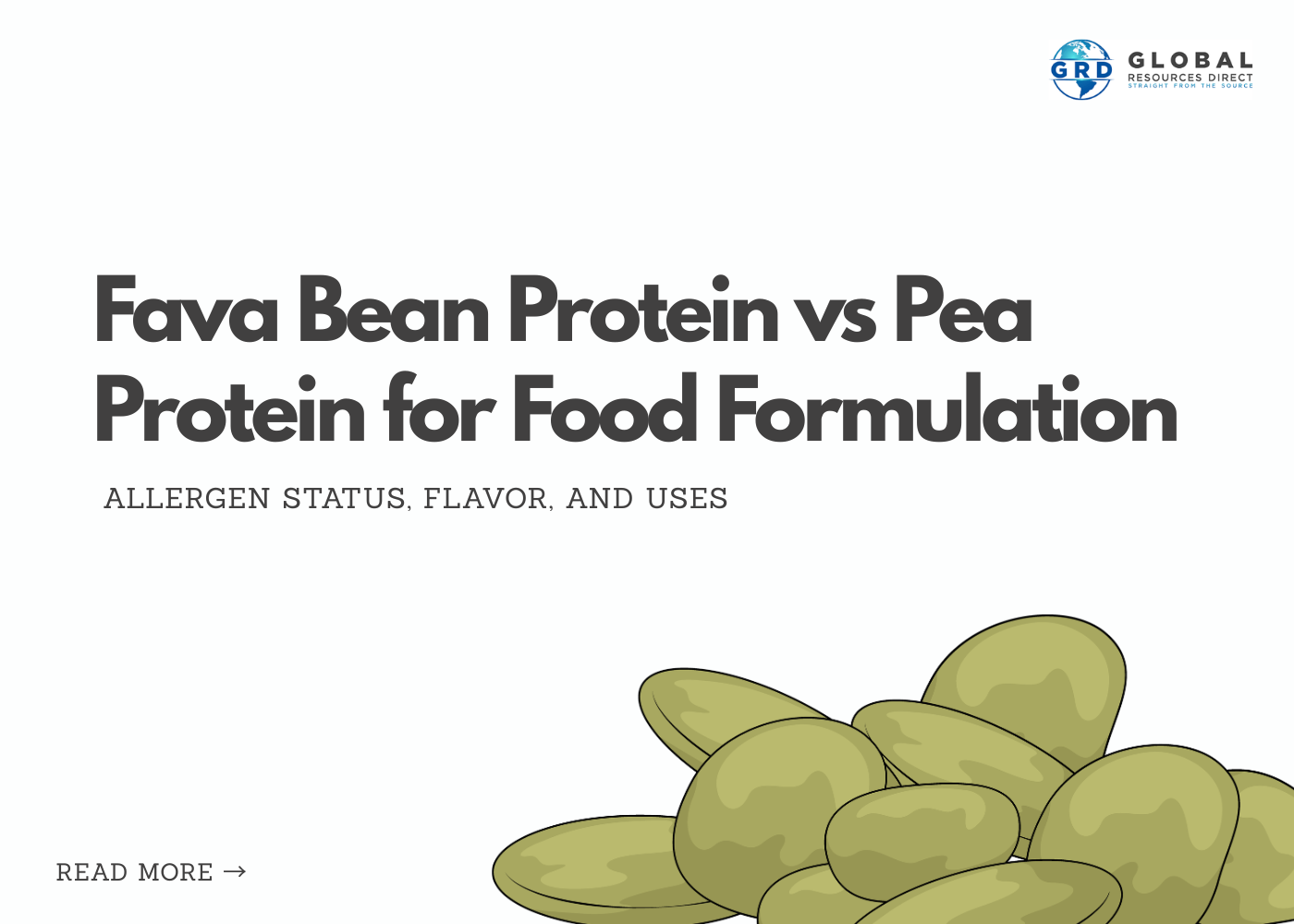


Fava Bean Protein vs Pea Protein for Food Formulation: Allergen Status, Flavor, and Uses

Fava bean protein and pea protein are both pulse-based isolates used in plant-based food manufacturing. Both deliver 80% or higher protein on a dry basis, and both are vegan, gluten-free, and soy-free. The practical difference sits in allergen positioning, flavor, and texture behavior in a finished product.
Pea protein is the established choice with strong solubility and a proven supply chain. Fava bean protein is the emerging alternative, with a milder flavor, smoother mouthfeel, and a cleaner allergen profile. Choosing between them comes down to the formulation.
Fava Bean Protein vs Pea Protein at a Glance
Both start as dried pulses processed into a high-protein isolate, so the difference is in how each performs. The table below sets them side by side.
| Factor | Fava Bean Protein Isolate | Pea Protein Isolate (80%) |
|---|---|---|
| Protein content | ~85% (dry basis) | 80–85% (dry basis) |
| Source crop | Fava bean (Vicia faba) | Yellow pea (Pisum sativum) |
| Major food allergen (FDA) | No | No |
| Flavor profile | Milder, slightly nutty | Earthy, grassy, stronger off-notes |
| Solubility | Moderate; improves with processing | Good; dissolves well in liquid |
| Limiting amino acid | Methionine | Methionine |
| Organic available | Yes | Yes |
Both proteins contain all nine essential amino acids. Both pair well with rice protein to close the methionine gap.
Protein Content and Amino Acid Profile
Nutritionally, the two proteins are close. The gaps are the same, and blending strategies fix them the same way.
Protein Percentage
Fava bean protein isolate typically delivers around 85% protein on a dry basis. Pea protein isolate at 80% sits at 80% to 85% depending on grade. Both are high in lysine, which makes them useful complements to cereal-based proteins.
Closing the Methionine Gap
Both proteins are limited in methionine and cysteine. Blending with rice protein at a 70:30 or 60:40 ratio (pulse to rice) creates a combined amino acid profile that approaches whey. The fix works the same regardless of whether fava bean or pea protein is the base.
Allergen Status
Allergen positioning is where fava bean protein separates from pea protein most clearly, especially for products marketed to sensitive consumer segments.
Pea Protein
Pea is not a major food allergen. However, pea is a legume, and some consumers with peanut allergies also react to other legumes, including pea. Some manufacturers and retailers require advisory statements on products containing pea protein as a result.
Fava Bean Protein
Fava bean is also a legume but is not classified as a major food allergen by the FDA. Allergic reactions to fava beans are rare. The FDA's GRAS review of fava bean protein isolate noted that allergic reactions to fava beans are rare and consistent with responses to other legumes.
For procurement teams building an allergen-friendly product line, fava bean protein avoids the allergen associations tied to soy, dairy, tree nuts, and peanuts without the legume cross-reactivity concerns that pea protein can raise. One consideration specific to fava bean is G6PD deficiency, sometimes called favism. Modern processing reduces vicine and convicine, the compounds responsible. Confirm that your supplier tests and certifies low levels.
Where Allergen-Free Positioning Matters
Allergen-friendly labeling carries the most weight in these categories:
-
Infant and toddler nutrition
-
Clinical and medical nutrition
-
Hypoallergenic sports nutrition
-
School and institutional foodservice
Flavor and Functionality in Food Applications
Flavor and texture drive the practical formulation decision after allergen status. Each protein behaves differently in liquid, in structured formats, and under heat, much like how plant-based proteins vary in performance across food categories.
Flavor
Pea protein carries an earthy, grassy flavor with beany off-notes. Masking those flavors adds cost through sweeteners and flavoring agents. Fava bean protein has a milder, slightly nutty taste with less bitterness and less aftertaste. For applications where clean taste matters, fava bean protein reduces the flavoring load.
Solubility
Pea protein dissolves well at neutral and alkaline pH, making it a strong fit for ready-to-drink beverages. Fava bean protein has moderate solubility that improves with modern extraction. For high-volume beverage lines where lot-to-lot consistency is critical, pea protein is the safer spec.
Texture in Meat Analogs
Pea protein's gel strength makes it a common choice for burgers and patties. Fava bean protein produces a smoother, less fibrous texture that works better in sausages, nuggets, and emulsified formats. Blending the two delivers structure from pea and mouthfeel from fava.
How to Choose and Spec the Right Protein for Your Line
The choice tracks allergen requirements, flavor tolerance, and application type. Two steps finish it.
Choose by Application and Label Requirements
Choose fava bean protein for allergen-free labeling, lower flavor masking costs, smoother mouthfeel, and clean-label positioning with minimal additives. Choose pea protein for established supply chain pricing, strong gel strength in structured textures, solubility consistency across large runs, and organic certification at scale.
Set the Spec
A clear spec keeps protein performance consistent across lots. When choosing an ingredient supplier, confirm the following before pricing:
-
Protein percentage on a dry basis and the test method used
-
Amino acid profile for the specific grade
-
Allergen and cross-contamination documentation
-
Vicine and convicine levels (for fava bean protein)
-
Organic, non-GMO, vegan, or kosher certification as required
Sourcing Fava Bean Protein and Pea Protein
Need bulk fava bean protein isolate or other proteins and powders for plant-based food formulation? Contact Global Resources Direct for same-day quotes, competitive pricing, and flexible minimums.
Frequently Asked Questions
Is Fava Bean Protein Allergen-Free?
Fava bean is not classified as a major food allergen by the FDA. Allergic reactions to fava beans are rare. Manufacturers may include a voluntary advisory for G6PD deficiency on consumer-facing packaging.
What Is the Protein Percentage in Fava Bean Protein vs Pea Protein?
Fava bean protein isolate typically delivers around 85% protein on a dry basis. Pea protein isolate ranges from 80% to 85% depending on grade.
Can Fava Bean Protein Replace Pea Protein Directly in a Formulation?
A direct swap works well in baked goods and bars. In beverages and meat analogs, bench-scale trials will confirm whether pH, temperature, or co-ingredient ratios need adjustment.
Does Fava Bean Protein Work in Beverages?
Pea protein has the edge in solubility, while fava bean protein has the edge in flavor. For clean-label beverages that prioritize taste over maximum solubility, fava bean protein is worth trialing.
Can You Blend Fava Bean Protein and Pea Protein?
Yes. A blend combines pea protein's gel strength with fava bean protein's smoother mouthfeel and milder flavor. Common starting ratios are 60:40 or 50:50 pea to fava.
How Should Bulk Fava Bean Protein Be Stored?
Store in a cool, dry place away from light, heat, and strong odors. Confirm the Certificate of Analysis on receipt and rotate stock to preserve flavor and functionality.