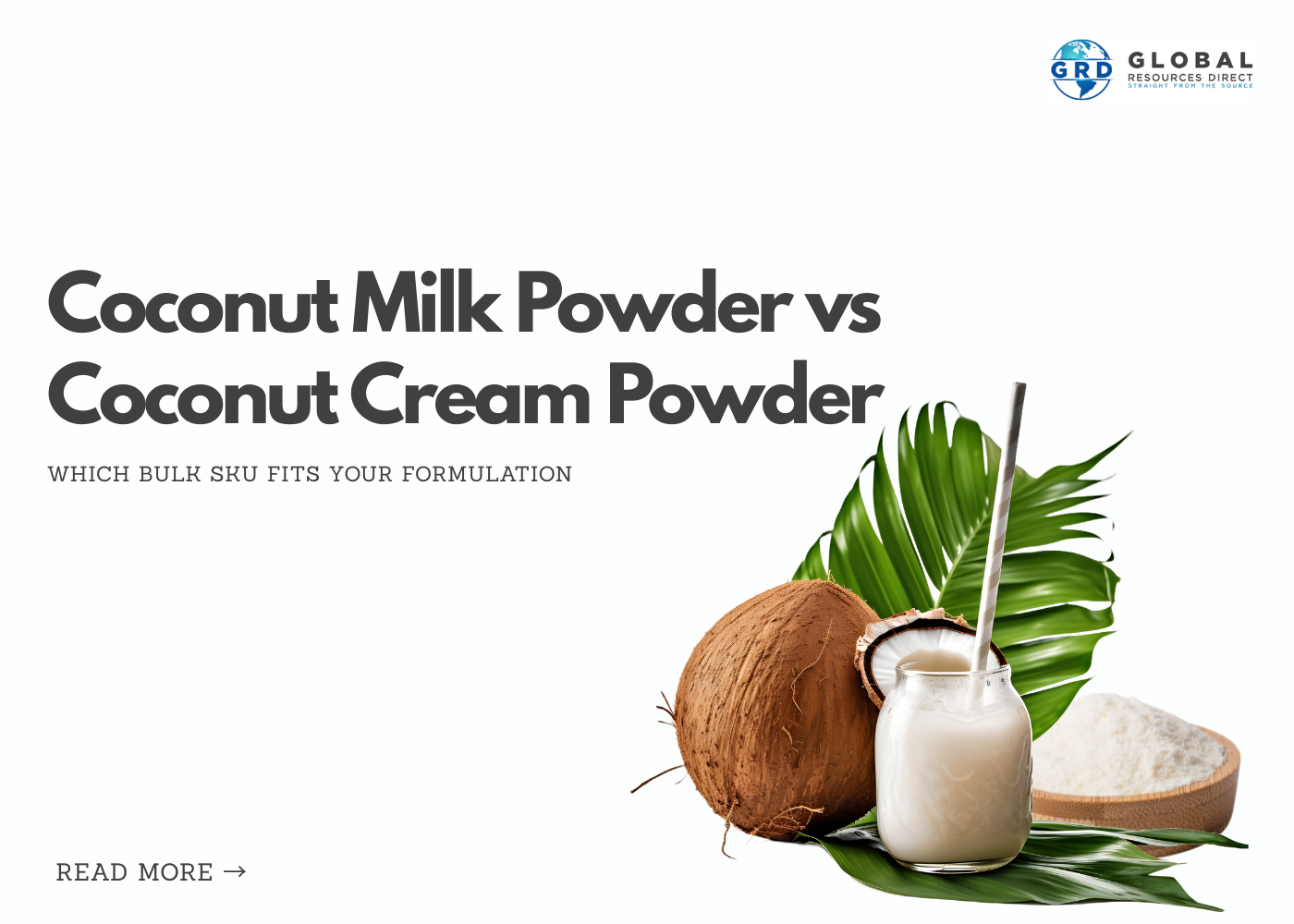
Coconut Milk Powder vs. Coconut Cream Powder: Which Bulk SKU Fits Your Formulation

Coconut milk powder and coconut cream powder are both spray-dried coconut, but they are not quite the same SKU. Cream powder usually starts from higher-fat coconut cream and delivers more richness per gram. Bulk coconut milk powder is typically lighter and blends easily into beverages, soups, and dry mixes.
Supplier names for these products are not standardized, so the spec sheet decides which one fits. Below, you will see how each is made, how they compare, which suits your application, and what to check before you order.
How Coconut Milk Powder and Coconut Cream Powder Are Made
Both powders start as liquid coconut milk or cream pressed from grated coconut meat. The liquid is dried into a fine, free-flowing powder that rehydrates in water.
Spray Drying Coconut Milk or Cream
Producers blend the coconut liquid with a carrier, then spray it into hot air so the water evaporates almost instantly. The powder that falls out keeps much of the coconut flavor and aroma. A higher-fat starting liquid gives a richer, creamier powder.
Carriers and Why They Matter
Carriers such as maltodextrin, tapioca starch, or acacia gum help coconut fat dry into a stable powder. Some coconut milk powders use sodium caseinate, a milk protein, which rules out dairy-free and vegan claims. Always ask for the full ingredient list before you approve a SKU.
Coconut Milk Powder vs Coconut Cream Powder
The main difference is fat content, which drives richness, mouthfeel, and how much powder you need per serving. Each one has a clear role in formulation.
Coconut Milk Powder
Coconut milk powder is usually lighter in fat and dissolves quickly in water. Beverages, instant soups, sauces, and dry mixes are a natural fit, since smooth dispersion matters most there. Organic coconut milk powder is a common choice for clean-label and plant-based products.
Coconut Cream Powder
Coconut cream powder is usually higher in fat and gives a fuller, creamier result. Desserts, confectionery, frozen treats, and rich curries benefit most from that extra fat. You may need less of it to reach the same richness.
Why the Names Overlap
There is no single industry definition for either name, so one supplier's milk powder can match another's cream powder. Compare fat percentage, carrier, and ingredient list rather than the product name.
| Feature | Homemade | Commercial |
|---|---|---|
| Food Safety | Not pasteurized. Safe only in fully cooked recipes. | Pasteurized. Safe for all applications including no-bake. |
| Consistency | Variable grind depending on equipment. | Ultra-fine, uniform powder. |
| Shelf Life | Up to 12 months if fully dried and sealed. | 1 to 2 years with verified stability testing. |
| Effort | Several hours of prep, drying, and grinding. | Ready to measure and use. |
Which Bulk SKU Fits Your Formulation
Match the powder to how your product is made and what the finished texture needs. If you are weighing liquid formats instead, see the difference between coconut milk and coconut cream.
Beverages and Dry Mixes
Coconut milk powder is usually the better fit for drink mixes, smoothie bases, and instant products. Fast dispersion keeps the drink smooth and light.
Bakery, Confectionery, and Desserts
Coconut cream powder adds richness to fillings, icings, frozen desserts, and candies. Its higher fat content can also help mouthfeel in reduced-dairy recipes.
Soups, Sauces, and Curries
Either powder works, depending on how rich the finished product should be. Many manufacturers start with coconut milk powder and add cream powder only where they need more body.
Dairy-Free and Plant-Based Products
Both can replace dairy cream or milk powder in plant-based products, as long as the carrier is dairy-free. Confirm the allergen statement on every lot. For more uses, see coconut products in food manufacturing.
What to Check From a Bulk Coconut Milk Powder Supplier
A wholesale coconut milk powder supplier should back each SKU with a clear spec sheet and lot documents. An organic coconut milk powder supplier should also send current certificates. Confirm these points before you order.
- Fat percentage, stated on the spec sheet
- Carrier and full ingredient list
- Allergen statement, especially for milk
- Moisture, solubility, and microbial results per lot
- Certifications such as USDA Organic, vegan, or non-GMO
- Packaging format and shelf life
How to Source Bulk Coconut Milk Powder
Use the same three steps for every new supplier. Following them keeps quality and cost predictable from trial to full production.
Step 1. Set Your Fat and Carrier Spec
Decide the fat range and carrier your product needs, including any dairy-free or organic requirements. Share that spec with every supplier, so quotes compare like for like.
Step 2. Trial in Your Product
Test samples in your actual formula, not just in water. Check dispersion, flavor, color, and texture at your target usage level.
Step 3. Confirm Packaging, Storage, and Supply
Bulk coconut milk powder usually ships in cases, with pallet and truckload options for larger orders. Store it sealed in a cool, dry, odor-free place away from light and heat, since the powder can absorb moisture and cake.
Choosing Between Coconut Milk Powder and Coconut Cream Powder
Pick coconut milk powder for light, fast-dispersing applications and cream powder where richness matters most. Whichever you choose, judge the SKU by fat percentage, carrier, and allergen statement rather than its name.
Need bulk organic coconut milk powder or other coconut ingredients for beverage, bakery, or plant-based production?
Request a quote to discuss your next bulk ingredient order.
Frequently Asked Questions
What's the difference between coconut milk powder and coconut cream powder?
Coconut cream powder usually starts from higher-fat coconut cream and gives more richness per gram. Coconut milk powder is typically lighter and disperses quickly, but names vary, so compare fat percentage on the spec sheet.
What should I look for in a bulk coconut milk powder supplier?
Look for a supplier that states fat percentage, carrier, and allergen information on the spec sheet and sends lot documents with every order. Organic and vegan certificates matter if your label makes those claims.
Is coconut milk powder dairy-free?
Dairy-free status depends on the carrier. Some coconut milk powders use sodium caseinate, a milk protein, so check the ingredient list and allergen statement.
Can coconut milk powder replace coconut cream powder in a formula?
Often yes, though you may need a higher usage level to reach the same richness. Run a trial to confirm texture and flavor before scaling.
Is organic coconut milk powder available in bulk?
Yes, organic coconut milk powder is widely available in bulk. Ask for a current USDA Organic certificate along with each lot's documents.
How should bulk coconut milk powder be stored?
Keep it sealed in a cool, dry, odor-free place away from light and heat. Reseal opened cases quickly, since the powder absorbs moisture.