

Coconut Ingredients for RTD Beverage Manufacturing: Cream, Milk, Oil, and Sugar

Coconut is one of the most versatile ingredient families in plant-based beverage manufacturing. From creamy lattes to shelf-stable smoothies, coconut products show up across nearly every RTD (ready-to-drink) beverage category.
But coconut cream, coconut milk, coconut oil, and coconut sugar each behave differently in formulation, and picking the wrong one for your application can mean separation issues, off-flavors, or unexpected cost overruns. Here is a straightforward breakdown of each coconut ingredient and how to use it in commercial beverage production.
Coconut Cream vs. Coconut Milk in Beverage Formulation
The most common point of confusion for beverage manufacturers is when to use coconut cream versus coconut milk. The answer comes down to fat content and the mouthfeel you are targeting.
When to Use Coconut Cream
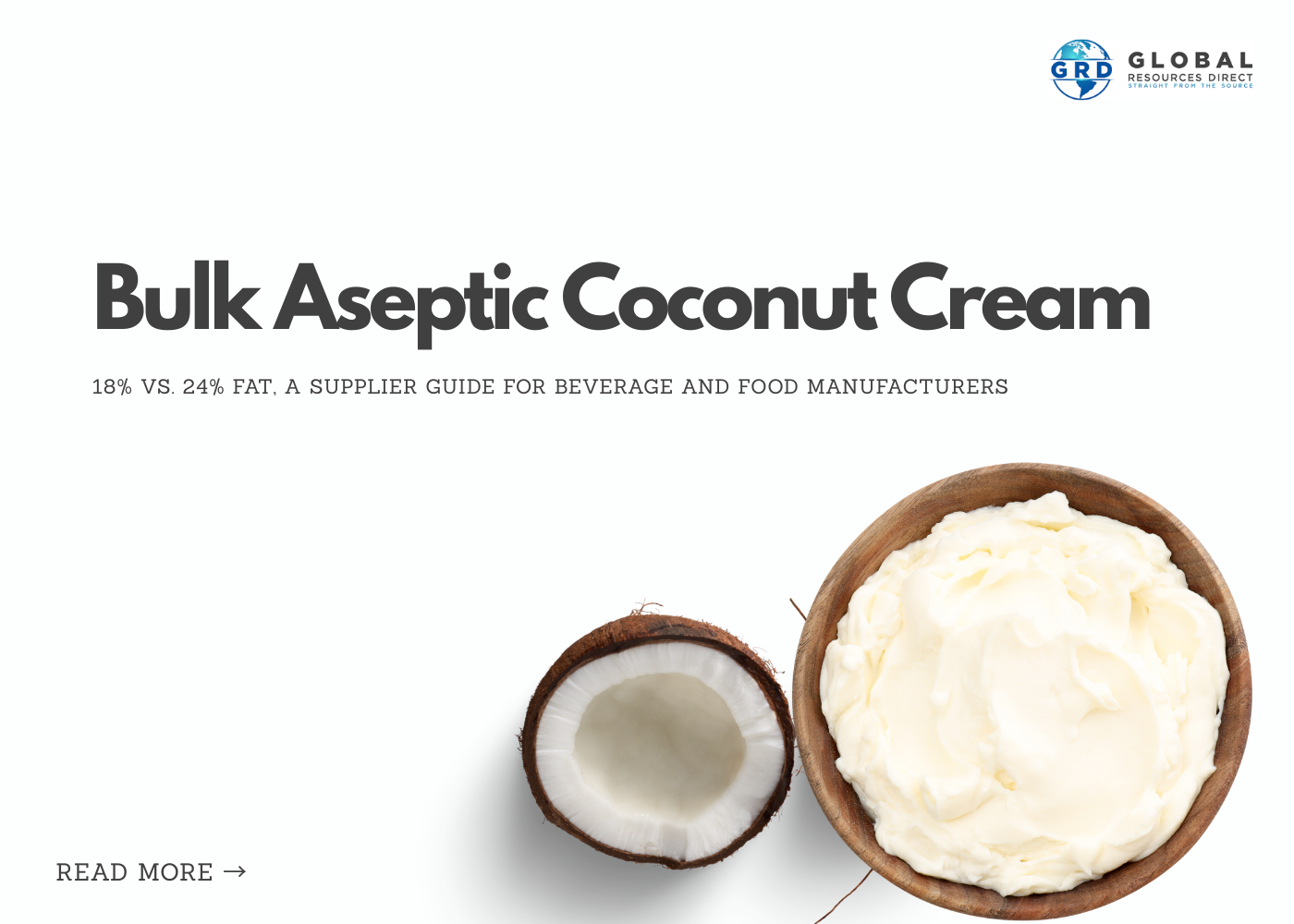
Coconut cream generally contains a higher fat content (often in the range of 20-25%, though this varies by supplier) and delivers a rich, thick texture. For RTD beverages that need body and indulgence (think coffee creamers, protein shakes, or dessert-style drinks), coconut cream provides the mouthfeel consumers expect.
Aseptic coconut cream performs well in shelf-stable applications because the high fat content helps stabilize emulsions during UHT processing. Request cream with a specific fat percentage from your supplier to ensure batch-to-batch consistency.
When to Use Coconut Milk
Coconut milk runs lower in fat, usually between 5-15% depending on the grade. For lighter beverages like flavored coconut waters, plant-based milk alternatives, and low-calorie smoothies, coconut milk gives you coconut flavor without the heaviness. Coconut milk is also more cost-effective than cream on a per-unit basis, making it the smarter choice when fat content is not the primary driver.
Coconut Oil in Beverage Applications
Coconut oil plays a different role than cream or milk. In RTD beverages, refined coconut oil is sometimes used as a source of MCTs (medium-chain triglycerides) in functional drinks and as a creaming agent in powdered drink mixes.
Refined vs. Virgin for Beverage Use
Refined coconut oil has a neutral flavor and higher smoke point, making it more suitable for beverages where you do not want coconut flavor to dominate. Virgin coconut oil retains its natural coconut taste and aroma, which can be a plus for tropical-themed products. For most commercial RTD applications, refined coconut oil is the safer choice because it blends more predictably and does not introduce variability in taste.
Emulsification Challenges
Coconut oil is solid below 76°F, which can create texture problems in cold beverages. If your product is served chilled, you will need an emulsification system (typically lecithin or mono- and diglycerides) to keep the oil dispersed and prevent clumping. Work with your ingredient supplier to identify the right emulsifier pairing for your formulation.
Using Coconut Sugar as a Sweetener in RTD Beverages
Coconut sugar has become popular as a less-refined sweetener option for clean-label beverages. Made from the sap of coconut palm flowers, it provides a caramel-like sweetness that works well in coffee drinks, chai concentrates, and chocolate-flavored beverages.
Key considerations for using coconut sugar in RTD production:
-
Solubility: Coconut sugar dissolves readily in warm liquids but can leave sediment in cold beverages if not fully dissolved during batching
-
Color impact: Coconut sugar adds a light brown tint, which works for darker beverages but may be undesirable in clear or light-colored drinks
-
Shelf stability: Coconut sugar does not impact product stability differently than cane sugar in most shelf-stable formulations
-
Label appeal: "Coconut sugar" reads well on ingredient panels and supports reduced-processing claims
For manufacturers using sugars and sweeteners in their formulations, coconut sugar is a straightforward swap for cane sugar at a 1:1 ratio by weight in most beverage applications.
Minimum Orders and Bulk Packaging
Wholesale coconut products for beverage manufacturing typically ship in the following formats:
-
Coconut cream: Aseptic bags in boxes (typically 18-20 kg), drums, or totes
-
Coconut milk: Similar aseptic packaging, also available in cans for smaller runs
-
Coconut oil: Drums (55 gallons), totes, or flexitanks for large volume
-
Coconut sugar: 25-50 lb bags, palletized for bulk orders
Minimum order quantities vary by supplier, but many wholesale bulk ingredient distributors offer flexible minimums for manufacturers scaling up from pilot batches to full production.
Conclusion
Choosing the right coconut ingredient for your RTD beverage starts with understanding the fat content, flavor profile, and functional behavior each product brings to your formulation. Matching cream, milk, oil, or sugar to your specific application avoids costly reformulation down the line.
Need bulk coconut cream, milk, oil, or sugar for beverage production? Contact Global Resources Direct for wholesale pricing, COAs, and fast turnaround on quotes.
Frequently Asked Questions
What is the difference between coconut cream and coconut milk for commercial beverages?
Coconut cream has 20-25% fat and delivers a rich, thick texture. Coconut milk has 5-15% fat and is better suited for lighter beverages. Choose based on the mouthfeel your product requires.
How does aseptic coconut cream perform in shelf-stable RTD applications?
Aseptic coconut cream performs well in UHT-processed beverages because its high fat content helps stabilize emulsions during thermal processing, extending shelf life without separation.
What fat percentages are available in bulk coconut cream?
Bulk coconut cream is typically available in fat ranges from 20% to 25%. Request a specific fat percentage from your supplier to ensure consistency across production batches.
Can coconut sugar be used in RTD beverages without affecting product stability?
Yes. Coconut sugar does not affect shelf stability differently than cane sugar in most formulations. Ensure full dissolution during warm batching to prevent sediment in cold-served products.
What are the minimum order requirements for bulk coconut ingredients?
MOQs vary by supplier and format. Many wholesale distributors offer flexible minimums, especially for new customers. Expect pallet-level minimums for most bulk coconut products.
Does coconut oil cause separation in cold beverages?
Coconut oil solidifies below 76°F, which can cause clumping in cold drinks. Using an appropriate emulsifier (lecithin or mono/diglycerides) keeps the oil dispersed throughout the product.