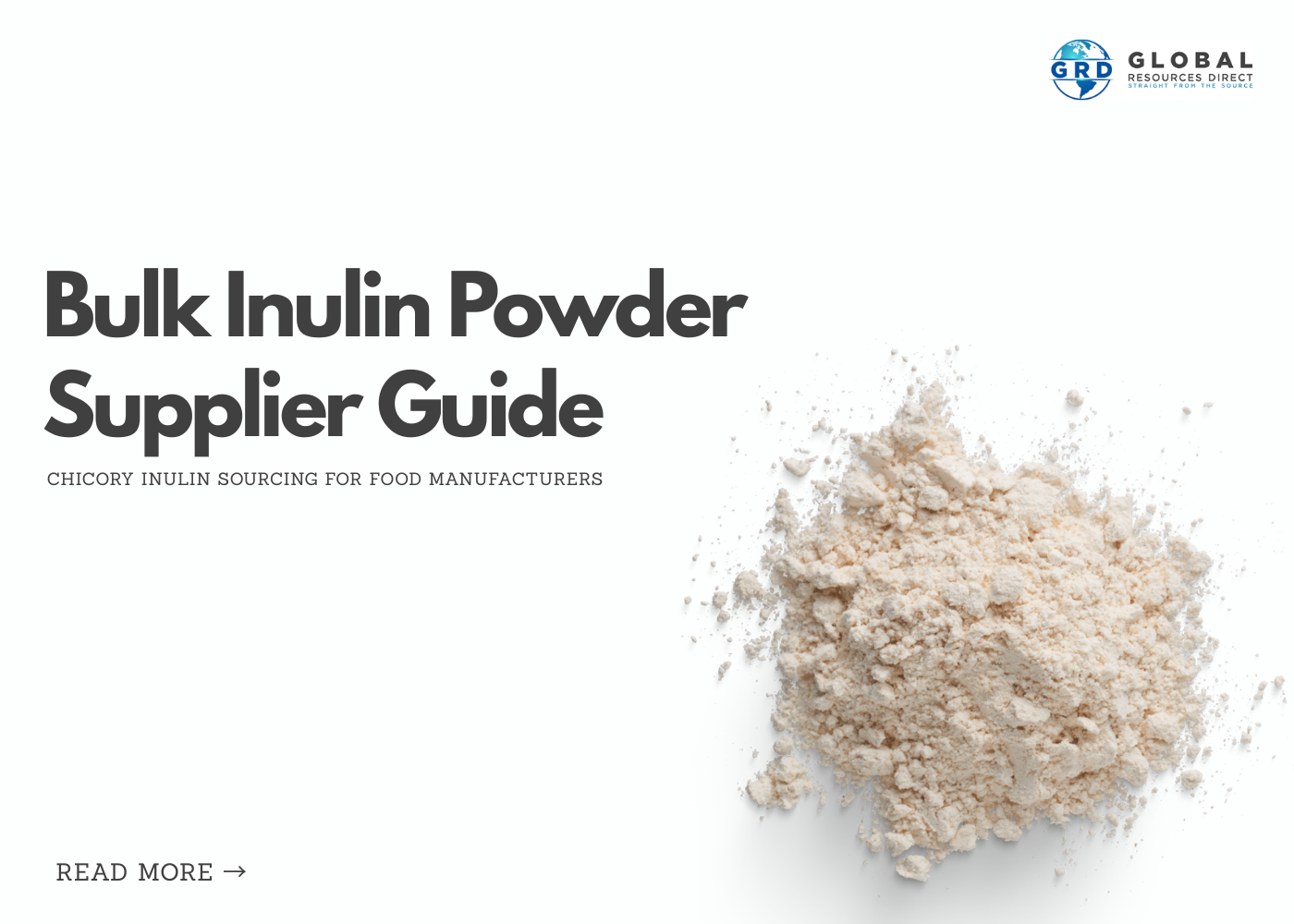


Bulk Inulin Powder Supplier Guide: Chicory Inulin Sourcing for Food Manufacturers

For most food manufacturers, chicory root inulin is the standard choice for adding soluble fiber, building body in reduced-sugar products, and improving mouthfeel. The right bulk inulin supplier offers the chain length your formula needs, a certificate of analysis (COA) for every lot, and inulin content stated on a dry basis.
Below, you will see the main inulin types, how inulin works in formulation, what to check on a spec sheet, and where to source chicory inulin wholesale.
What Chicory Inulin Is and Why Manufacturers Use It
Inulin is a naturally occurring fiber made of chains of fructose units. Chicory root is the main commercial source because it has a high inulin content and processes consistently.
How Chicory Inulin Is Made
Producers slice chicory roots, extract the inulin with hot water, then purify and spray-dry it into a fine white powder. Most chicory inulin is processed in Western Europe, with some production in South America. Agave is a second source, often chosen for organic or Latin American supply chains.
How It Counts on the Label
The Food and Drug Administration (FDA) allows inulin and inulin-type fructans to be declared as dietary fiber on the Nutrition Facts label. That makes inulin one of the simplest ways to raise the fiber line on a product.
Chicory Inulin Types for Food Formulation
Inulin is sold by chain length, which decides sweetness, solubility, and texture. Pick the type by the job it needs to do.
Standard Inulin
Standard inulin has a mix of short and long chains. Standard grades dissolve well, taste neutral to slightly sweet, and suit beverages, dairy, bars, and baked goods. Most fiber fortification starts here.
Long-Chain Inulin
Long-chain inulin, sometimes sold as high-performance inulin, is less sweet and less soluble. In water, long-chain inulin forms a creamy gel, which helps replace fat in spreads, dairy, and dressings. Use it where texture matters more than sweetness.
Oligofructose
Oligofructose, also called fructooligosaccharides (FOS), is the short-chain fraction. Oligofructose is more soluble and noticeably sweeter, so it pairs well with high-intensity sweeteners in sugar-reduced products. Some grades also help browning in baked goods.
|
Type |
Sweetness |
Solubility |
Best Use |
|
Standard inulin |
Low |
Good |
Fiber fortification across most products |
|
Long-chain inulin |
Very low |
Lower |
Fat replacement and creamy texture |
|
Oligofructose (FOS) |
Moderate |
High |
Sugar reduction and browning |
|
Organic chicory inulin |
Depends on type |
Depends on type |
Organic-certified products |
Inulin as a Prebiotic Fiber Ingredient in Functional Food Formulation
Inulin is a viable prebiotic fiber ingredient for functional food formulation, and it is one of the most widely used. Any prebiotic or health statement on your label still needs review by your regulatory team.
Sugar and Fat Reduction
Inulin adds bulk and body when you cut sugar or fat. Pair oligofructose with stevia or other high-intensity sweeteners, or use long-chain inulin to rebuild creaminess. Either way, it fills the gap the removed ingredient leaves.
Fiber Fortification
Standard inulin blends into bars, cereals, beverages, and dairy with little effect on flavor. Many formulas pair it with other fibers, such as psyllium husk powder, oats, or resistant starch. For more on building fiber into products, see enhancing nutritional profiles with oats.
Use Levels and Tolerance
Use levels per serving affect how well consumers tolerate inulin. Set use levels with your nutrition and regulatory teams, then confirm them in consumer testing. Start low and step up during trials.
Inulin Supplier Food Grade Specs to Check
A low quote means little if the spec sheet cannot back it up. Ask every inulin supplier for food-grade documentation that covers these points.
-
Inulin content, stated as a percentage on a dry basis
-
Inulin type or average chain length
-
Source, such as chicory or agave, and country of origin
-
Moisture, particle size, and solubility
-
Microbial and heavy metals results per lot
-
Certifications such as organic, non-GMO, kosher, or halal
Where to Source Bulk Chicory Inulin for Food Manufacturing
Most manufacturers buy chicory inulin wholesale through one of two routes. The bulk ingredients buying guide covers the general trade-offs.
Direct From Producers
A small number of large producers make most of the world's chicory inulin. Buying direct can lower unit cost at very high volumes, but minimum orders and lead times are longer.
US Ingredient Distributors
A US distributor holds domestic stock, ships smaller volumes, and sends a COA with each lot. You can often consolidate inulin with other fibers and sweeteners on one order. For many mid-size brands, this route balances cost, speed, and paperwork.
Steps to Qualify a Supplier
Run the same short process for every new bulk inulin supplier.
-
Compare the spec sheet and a recent lot COA against your internal spec
-
Run bench trials at two or three use levels to check taste, texture, and solubility
-
Confirm packaging, lead time, and storage, keeping inulin sealed, cool, and dry since it absorbs moisture
Choosing a Bulk Inulin Supplier
Choose the inulin type by the job it does, then pick a supplier that proves content and quality on every lot. A trial at several use levels will show you the right fit before you scale.
Need bulk chicory inulin or other fiber ingredients such as psyllium for bars, beverages, or bakery production? Contact Global Resources Direct for same-day quotes, competitive pricing, and flexible minimums.
Frequently Asked Questions
Where can I source bulk chicory inulin for food manufacturing?
Most manufacturers buy from US ingredient distributors or directly from large inulin producers. Distributors usually offer smaller minimums, faster delivery, and a COA with every lot.
Is inulin a viable prebiotic fiber ingredient for functional food formulation?
Yes, inulin is one of the most widely used fiber ingredients in functional foods. Have your regulatory team review any prebiotic or health statement before you put it on a label.
Can inulin be listed as dietary fiber on the Nutrition Facts label?
Yes, FDA allows inulin and inulin-type fructans to be declared as dietary fiber. Confirm labeling details with your regulatory team.
What is the difference between inulin and oligofructose?
Inulin includes longer fructose chains and tastes only slightly sweet. Oligofructose is the short-chain fraction, which is more soluble and sweeter.
What should a food-grade inulin spec sheet include?
A spec sheet should state inulin content on a dry basis, type or chain length, source, moisture, and microbial and heavy metals limits. Ask for a COA on every lot as well.
How should bulk inulin be stored?
Keep it sealed in a cool, dry place, since inulin readily absorbs moisture and can cake. Rotate stock first in, first out.