

Bulk Aseptic Coconut Cream: 18% vs. 24% Fat, A Supplier Guide for Beverage and Food Manufacturers

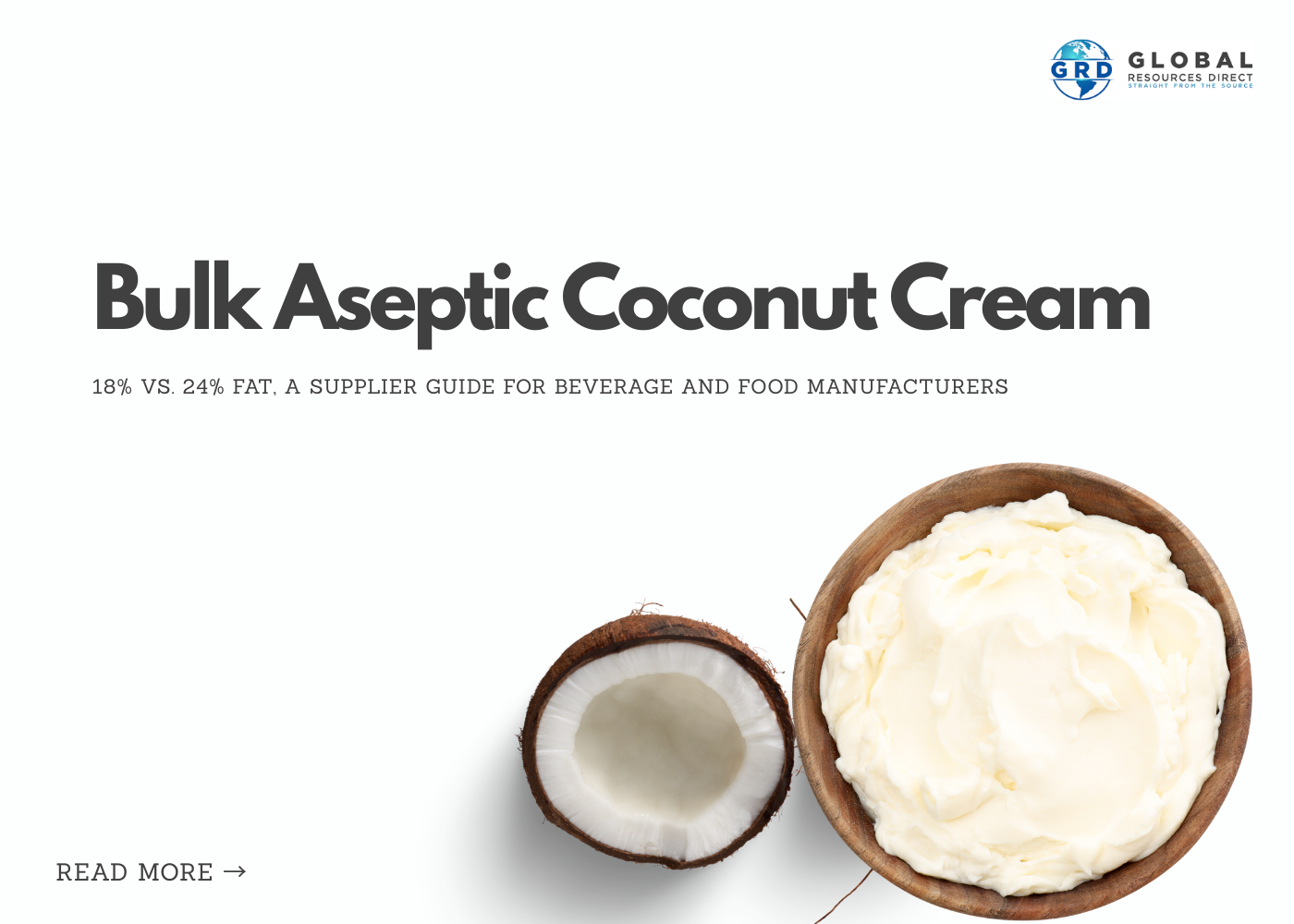
Choosing between 18% and 24% fat aseptic coconut cream comes down to one question: how rich does your formula need to be? The 24% cream delivers a heavier mouthfeel and stronger emulsion for creamers and ice cream bases. The 18% cream suits lighter beverages, soups, and sauces where you want coconut character without the weight.
Below, you will see how fat percentage affects formulation, which certifications apply, and how to pick the right bulk aseptic coconut cream supplier for your production run.
Coconut Cream 18% vs 24% Fat at a Glance
We stock three aseptic coconut cream options: two organic and one conventional, all shelf-stable in bulk. If you are weighing cream against milk first, our guide on the difference between coconut milk and coconut cream is a useful primer. The table below summarizes fat level, certification, and best-fit applications for each.
| SKU | Fat % | Certification | Best Applications | Mouthfeel Profile |
|---|---|---|---|---|
| 18% Organic Aseptic Coconut Cream | 18% | Organic | Lighter beverages, soups, sauces | Light, clean coconut body |
| 24% Organic Aseptic Coconut Cream | 24% | Organic | Creamers, ice cream bases, rich beverages | Full, creamy, indulgent |
| 24% Conventional Aseptic Coconut Cream | 24% | Conventional | Creamers, desserts, cost-sensitive rich formulas | Full, creamy, indulgent |
How Fat Percentage Affects Formulation
Fat is what carries richness, coats the palate, and stabilizes an emulsion in coconut cream. Moving from 18% to 24% changes all three, plus your cost per finished unit.
Mouthfeel and Richness in Ready-to-Drink Beverages
Higher fat coats the tongue longer and reads as creamier on the finish. The 24% cream gives ready-to-drink (RTD) beverages a fuller body, useful in coconut lattes and indulgent shakes. The 18% cream keeps a lighter, cleaner profile for waters, refreshers, and lighter plant-based drinks.
Emulsion Stability in Creamers and Dairy Alternatives
More fat gives emulsifiers more to work with, which helps hold a uniform texture through processing and shelf life. The 24% cream resists separation better in creamers and dairy-alternative bases. The 18% cream still emulsifies well but may need tighter process control at high-fat targets.
Cost-in-Use Considerations at Each Fat Level
The 18% cream carries a lower cost per unit, though you may need more of it to hit a rich target. The 24% cream costs more per unit while delivering more solids, so a smaller dose can reach the same richness. Run a cost-in-use calculation on your actual formula, not the per-pound price alone.
Why Aseptic Processing Matters for Shelf-Stable Formulation
Aseptic processing sterilizes the cream and its packaging separately, then fills in a sterile environment. That gives you a shelf-stable ingredient with predictable performance across runs.
Shelf Stability Without Refrigeration Before Opening
Aseptic cream stays stable at ambient temperature until you open it, which simplifies warehousing and cuts cold-chain costs. Rotate stock normally and follow the supplier shelf-life window. Refrigerate after opening.
Batch Consistency for Large-Scale Production Runs
Aseptic filling locks in a uniform fat and solids profile across lots. That consistency matters when you scale a formula from pilot to full production run. Fewer input swings mean fewer reformulation headaches.
Applications by Fat Percentage
Both fat levels work across beverages, dairy alternatives, and prepared foods, and coconut remains one of the most flexible ingredients in food manufacturing. The right pick depends on how much richness the finished product needs.
18% for Lighter Beverages, Soups, and Sauces
The 18% cream fits formats where coconut should support flavor without dominating the body.
-
Coconut waters and refreshers
-
Broth-based soups and curries
-
Pourable sauces and dressings
-
Lighter plant-based drinks
24% for Creamers, Ice Cream Bases, and Richer Beverages
The 24% cream fits formats built around a full, indulgent texture.
-
Non-dairy creamers
-
Ice cream and frozen dessert bases
-
Coconut lattes and indulgent shakes
-
Rich curries and dessert fillings
Certifications and QA Documentation
Every shipment can carry the paperwork your quality team and retail customers expect.
Organic and Conventional Options Compared
Two SKUs are certified organic, the 18% and 24% versions, for brands that need an organic aseptic coconut cream bulk supply. The 24% conventional cream gives the same rich profile at a different cost basis. Match the certification to your label claims and target price.
Certificate of Analysis and Allergen Statement With Every Shipment
A Certificate of Analysis (COA) confirms fat, solids, and microbial specs for each lot. An allergen statement and Quality Assurance (QA) documents support your food safety program and retailer audits. Request Kosher and third-party audit paperwork as needed.
Sourcing Bulk Aseptic Coconut Cream for Your Production Line
You get three aseptic options from one wholesale coconut cream partner for beverage manufacturing: two organic fat levels and one conventional. All ship shelf-stable in bulk formats sized for full production runs, backed by direct grower sourcing and same-day quote turnaround. Pick the fat level that matches your formula, then confirm current bulk formats when you request a quote.
Need bulk aseptic coconut cream for your beverage, creamer, or dairy-alternative line? Request a quote to discuss your next bulk ingredient order, or contact Global Resources Direct for same-day quotes, competitive pricing, and flexible minimums.
Frequently Asked Questions
What is the difference between 18% and 24% fat coconut cream?
The 24% cream has more fat, giving a richer mouthfeel and stronger emulsion, ideal for creamers and dessert bases. The 18% cream is lighter and cleaner, better suited to beverages, soups, and sauces.
Are organic and conventional aseptic coconut cream both available?
Yes. Two organic fat levels, 18% and 24%, plus a 24% conventional option ship in bulk aseptic formats.
Which coconut cream fat percentage is best for RTD beverages?
For lighter ready-to-drink beverages, 18% keeps a clean body. For indulgent, creamy drinks like coconut lattes and shakes, 24% delivers the fuller mouthfeel.
What order formats are available for bulk aseptic coconut cream?
Aseptic coconut cream ships in bulk, shelf-stable packaging sized for production runs. Confirm current pack sizes and minimums when you request a quote.
Does aseptic coconut cream need refrigeration?
No. Aseptic cream stays shelf-stable at ambient temperature until opened, after which it should be refrigerated.
Can I get a certificate of analysis and allergen statement with each shipment?
Yes. A certificate of analysis, allergen statement, and Quality Assurance documents can accompany each lot, with Kosher and third-party audit paperwork available on request.